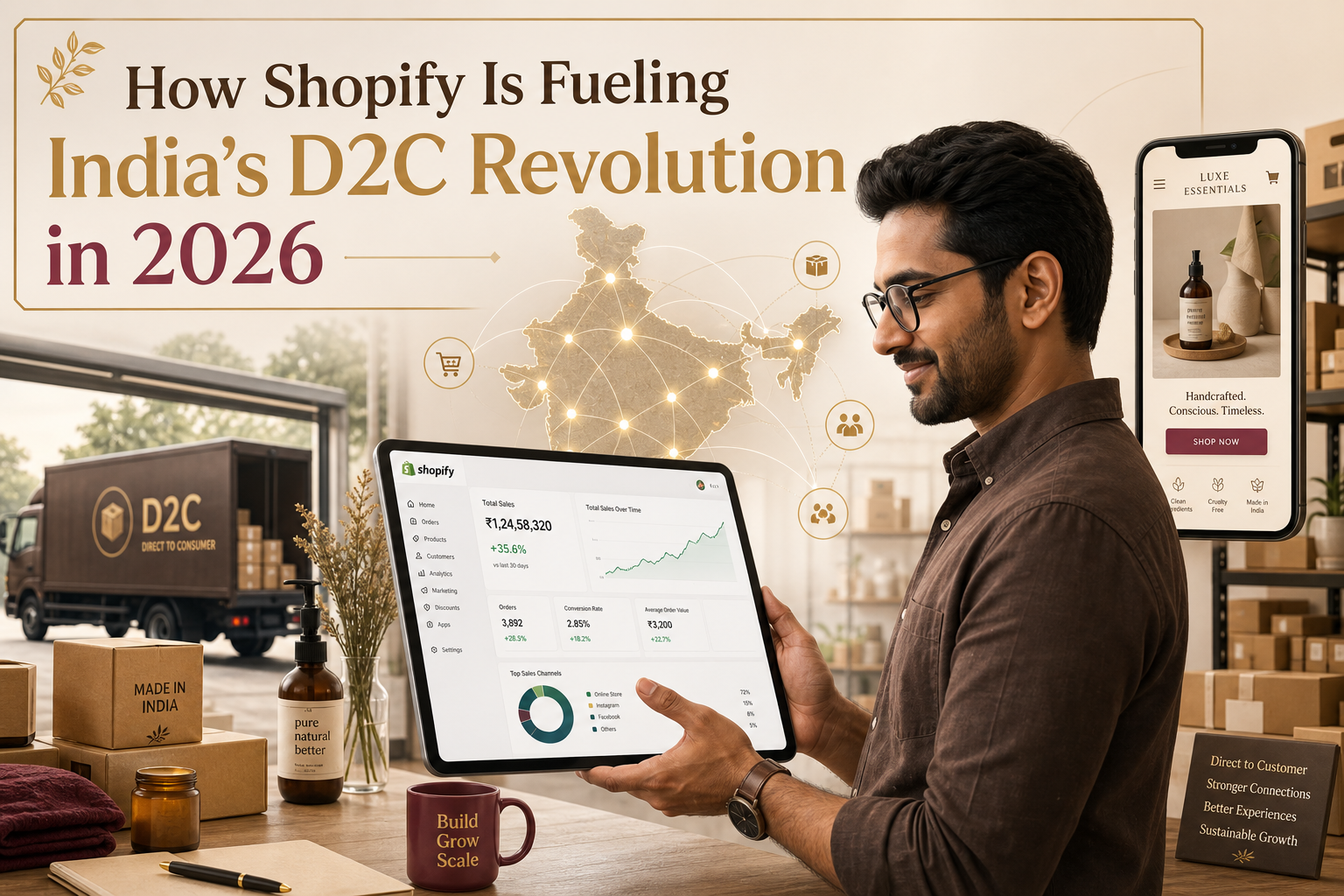
How Shopify Is Fueling India's D2C Revolution in 2026 — A Guide for Merchants
June 17, 2026
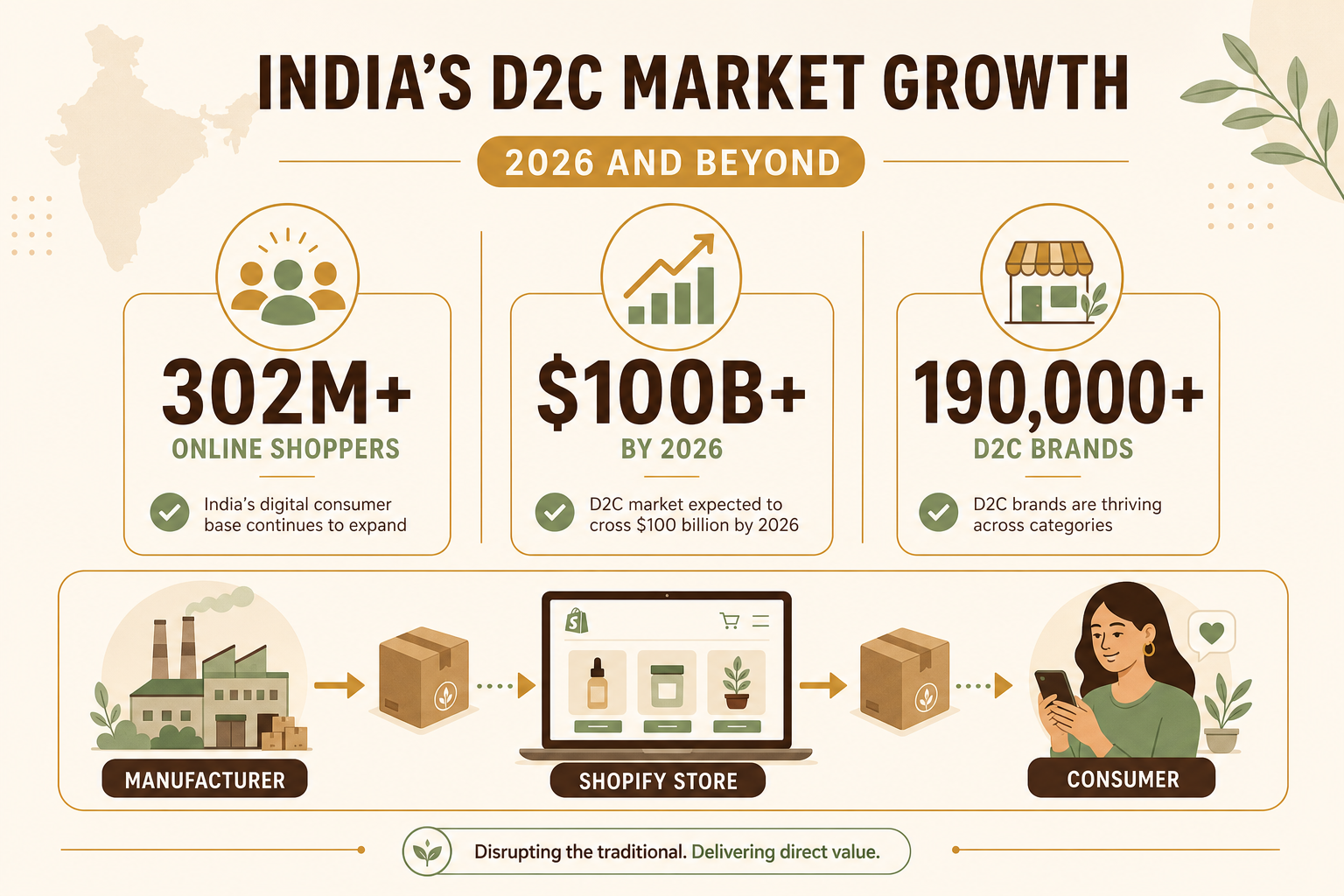
India's Direct-to-Consumer (D2C) market has exploded. Industry reports project it crossing $100 billion by 2025–26, driven by rising internet penetration, UPI adoption, and a fundamental shift in how Indians shop. At the center of this revolution sits Shopify — the platform powering thousands of homegrown brands from Mumbai to Meerut. But simply launching a store is not enough. This guide shows you exactly how to build, optimize, and scale a Shopify store tailored for the Indian market.
Why Shopify Is Winning Indian Merchants Over
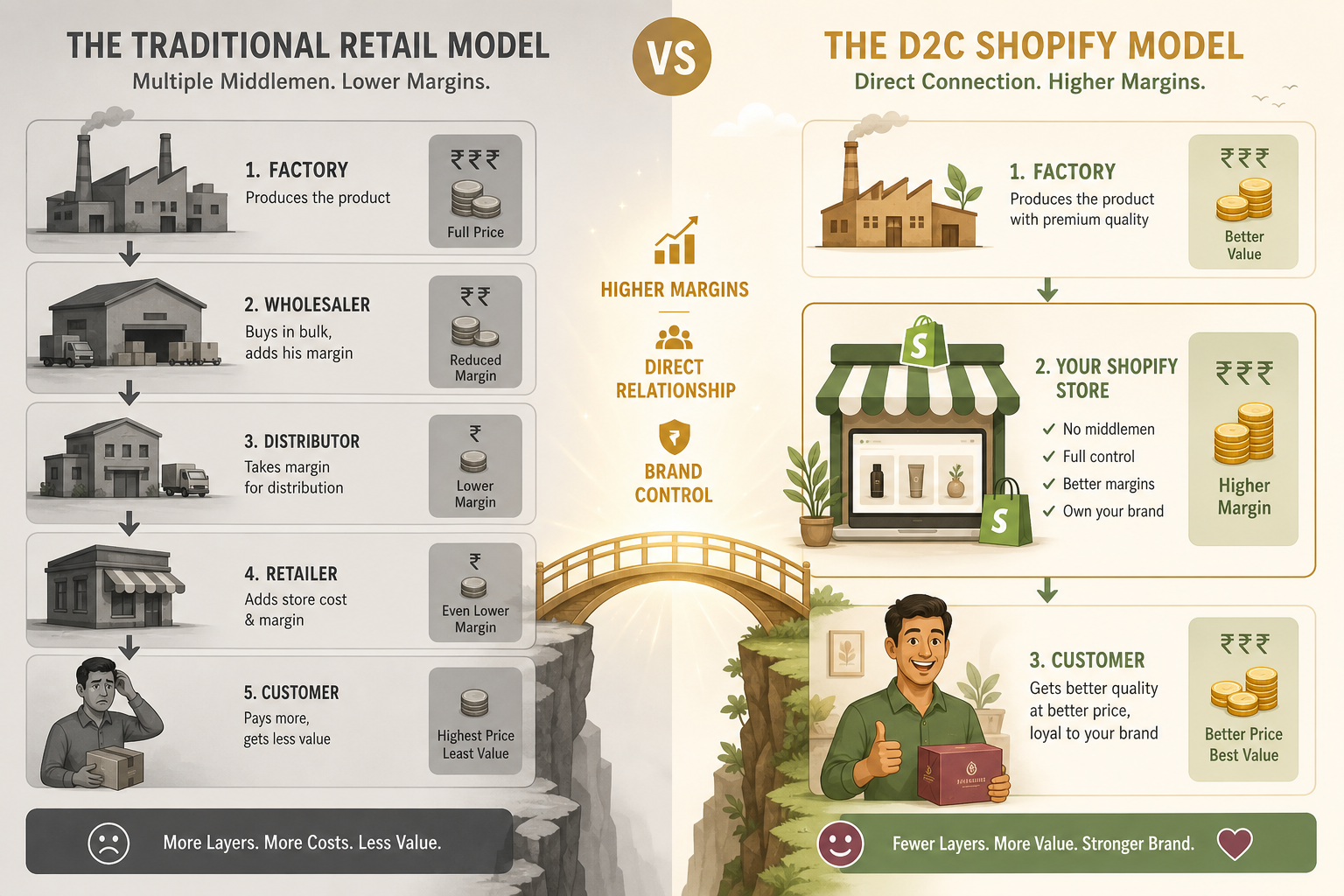
Shopify's appeal in India boils down to three things: speed, flexibility, and ecosystem.
- Speed to Market: You can go from idea to live store in under 48 hours. No heavy development, no server management. Just pick a theme, add products, and connect a payment gateway.
- Flexibility Without Code: Shopify's theme editor, metafields, and app marketplace let you customize everything — from product pages with size charts in regional languages to checkout flows optimized for Indian buyer behavior.
- The Indian App Ecosystem: The Shopify App Store now hosts dozens of India-specific apps: Shiprocket, Delhivery, Razorpay, Cashfree, Instamojo, EasyGST, and WhatsApp chat plugins. These solve real Indian problems natively.
Step-by-Step: Setting Up Your Shopify Store for India
1. Choose the Right Plan
Start with the Basic Shopify plan ($25/month). Most Indian D2C brands doing under ₹5 lakh/month in GMV don't need Shopify's advanced plans. Invest the savings in marketing instead.
2. Configure Indian Payment Gateways
This is critical. Your payment stack should include:
- Razorpay or Cashfree — supports UPI, Rupay, Netbanking, wallets
- Shopify Payments is not yet available in India, so you must use third-party gateways
- COD (Cash on Delivery) — enable it as a manual payment method and label it prominently. COD can account for 60–80% of orders for new Indian stores.
3. Set Up GST-Compliant Invoicing
India's GST regime requires proper tax invoices. Apps like EasyGST and GST Express auto-generate GST-compliant invoices, apply HSN codes, and handle state-wise tax rates. Do not skip this — your CA will thank you later.
4. Integrate Indian Logistics Partners
Connect Shiprocket or Pickrr through their Shopify apps. These platforms aggregate 20+ courier partners (Delhivery, Blue Dart, DTDC, XpressBees) and give you AI-recommended carrier selection. You'll save 30–40% on shipping costs vs. booking directly.
5. Set Up WhatsApp for Customer Communication
Indian customers love WhatsApp. Use the WhatsApp Chat plugin or apps like SuperLemon to let customers message you directly from the product page. For automated notifications (order confirmations, shipping updates, abandoned cart recovery), integrate WATI or Interakt.
Growth Strategies That Actually Work in India
1. Leverage Instagram and YouTube Shorts
Indian consumers discover products through short-form video more than search engines. Create 15–30 second product demos in Hindi, Tamil, or your target regional language. Tag products using Shopify's Instagram Shopping integration.
2. Run WhatsApp Broadcast Campaigns
Build a customer list and send limited WhatsApp broadcasts (not spam) with new arrivals, restocks, and exclusive discount codes. Open rates on WhatsApp in India exceed 90% — compare that to email's 15–20%.
3. Offer UPI-Based Discounts
Run promotions like "Flat ₹100 off on UPI payments." This incentivizes prepaid orders (reducing your COD burden) while aligning with how Indians already pay every day through PhonePe, Google Pay, and Paytm.
4. Build Trust with Indian Social Proof
Display customer photo reviews prominently. Integrate Loox or Judge.me for photo reviews. For Indian audiences, seeing real customers from their own city wearing or using your product is more powerful than any influencer endorsement.
Common Mistakes Indian Shopify Merchants Make
The Numbers That Matter
| Metric | Industry Avg (India) | Target |
|---|---|---|
| Mobile traffic share | 72% | Accept & optimize for 80%+ |
| COD order share | 55–70% | Reduce to 40% over time |
| Cart abandonment | 78% | Recover 15% via WhatsApp |
| Avg order value | ₹850–₹1,200 | Push to ₹1,500+ via bundles |
| Customer acquisition cost | ₹250–₹500 | Optimize via organic social |
Why Now Is the Time
The Indian government's ONDC (Open Network for Digital Commerce) initiative, improved digital infrastructure, and growing comfort with online shopping in smaller cities have created a once-in-a-decade window for Indian D2C brands. Shopify, with its relentless product updates and growing India-specific ecosystem, is the most reliable vehicle to capture this opportunity.
Whether you're selling handmade jewelry from Jaipur, organic spices from Kerala, or streetwear from Delhi — Shopify gives you the tools. What you do with them determines your success.
Need Help Setting Up or Scaling Your Shopify Store?
If you're an Indian merchant looking to launch, migrate, or optimize your Shopify store — I'd love to help. From GST-compliant invoicing to COD optimization, regional language support to multi-channel selling — let's build a store that actually converts for Indian customers.
Get in Touch →